The Boy Who Never Came Home
The Unsolved Disappearance of Kyron Horman
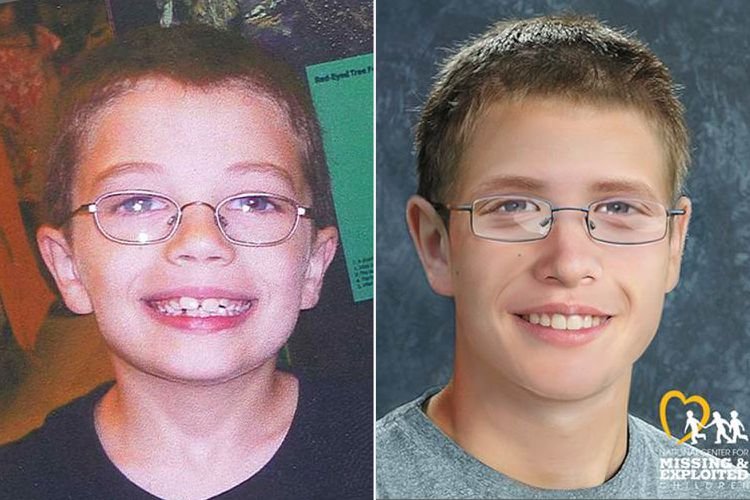
On June 4, 2010, seven-year-old Kyron Horman arrived at Skyline Elementary School in the hills west of Portland, Oregon, carrying a science-fair project about horned lizards. Photographs taken that morning show him smiling beside his display, wearing glasses and a red shirt.
They are among the last confirmed images of him.

Kyron was expected to return home that afternoon. He never did. More than 15 years later, he has not been found, no one has been charged in connection with his disappearance, and investigators have never publicly established what happened after he entered the school that morning.
The case remains one of Oregon’s most extensive and closely watched missing-child investigations. It also remains clouded by conflicting accounts, disputed witness claims, and intense suspicion surrounding Kyron’s stepmother, Terri Moulton Horman, who has never been charged and has consistently denied any involvement.

A Friday Morning at Skyline
Kyron was born in September 2002 to Desiree Young and Kaine Horman. His parents separated before his birth. After Young developed serious kidney problems, Kaine became Kyron’s primary caregiver, while Young remained involved in her son’s life.
Kaine later married Terri Moulton. The couple had a daughter, Kiara, and Kyron lived with them in the Portland area. By June 2010, he was a second-grade student at Skyline Elementary.
That Friday morning, Terri drove Kyron to school for the annual science fair. She later told investigators that she remained at the school for part of the morning, taking photographs of him beside his project. According to her account, she left the building at approximately 8:45 a.m.
Kyron did not appear in his classroom. His teacher marked him absent, but the absence did not result in an immediate notification to his family. The school day continued without anyone realizing that he was missing.
That afternoon, Kyron failed to arrive home on his school bus. Terri contacted the school and learned that he had been marked absent. Police were notified at approximately 3:45 p.m.; officers began investigating at the school and the family home later that afternoon.
The delay between Kyron’s disappearance and the discovery that he was missing quickly became one of the most consequential questions in the case.
Terri Horman’s Timeline
Terri told investigators that after leaving Skyline, she spent the morning running errands. Her account included stops at Fred Meyer stores, a craft store, and a gym. She also said she drove for a time because her toddler daughter appeared to be suffering from an earache.
Terri maintained that she returned home around early afternoon and later posted photographs from the science fair online. She has said that she believed Kyron was at school and had no reason to think he had disappeared until the school contacted her after he failed to get off the bus.
Investigators scrutinized that account closely. In the months after Kyron vanished, questions arose about the timing of Terri’s movements, the route she took, and whether anyone else was with her or had access to her truck.
Authorities also investigated reports from witnesses who said they saw someone inside or near Terri’s vehicle outside the school. Officials suggested that identifying the person could be important, but the individual was never publicly identified, and the significance of those accounts was never established in court.
A Massive Search
The initial search focused on Skyline Elementary and the surrounding wooded and rural areas. Law-enforcement officers, search-and-rescue teams, volunteers, and personnel from neighboring states participated.

Searchers examined roads, trails, ravines, bodies of water, and private property. Investigators also searched areas farther from the school, including Sauvie Island and the Sauvie Island Bridge, although authorities did not publicly explain all of the reasoning behind every location examined.
More than 1,000 people participated during the early search effort. Authorities described it as the largest missing-person search in Oregon up to that time. Rewards were eventually increased to $50,000.
Despite the scale of the operation, investigators found no confirmed trace of Kyron: no clothing, no belongings, no credible sighting after the morning at school, and no remains.
The family later appealed to the public to search sheds, vehicles, outbuildings, and other private areas, particularly properties whose owners might have been away.
The Allegation Involving a Landscaper
As the investigation continued, scrutiny increasingly focused on Terri.
In sworn testimony related to the case, landscaper Rodolfo Sanchez said Terri had offered him money months before Kyron disappeared to kill Kaine Horman. The alleged conversation reportedly occurred in early 2010. Terri denied the accusation.
Investigators arranged for Sanchez to speak with Terri while wearing a recording device. The conversation did not produce evidence that led to criminal charges.
The allegation nevertheless deepened the turmoil within the family. On June 28, 2010, less than a month after Kyron disappeared, Kaine filed for divorce. A restraining order also limited Terri’s contact with Kaine and the couple’s daughter.
The accusation against Terri concerned an alleged plot against her husband, not a proven explanation for Kyron’s disappearance. No one was charged over the alleged murder-for-hire conversation.
Polygraph Tests and the Grand Jury
Terri underwent polygraph examinations concerning Kyron’s disappearance. Public reports characterized the results as unfavorable to her, although polygraph testing is controversial, generally inadmissible as proof of guilt in court, and not a substitute for corroborating evidence. Terri has continued to deny involvement.
Investigators also examined Terri’s relationship with DeDe Spicher, a friend who became a prominent figure in reporting about the case. Spicher was questioned by authorities and allowed searches of her property and vehicle. She said she had been gardening at a Portland-area residence on the day Kyron disappeared and maintained that she had not left the property during the relevant period.
Spicher had also helped Terri obtain a prepaid cell phone after Kaine moved out. That fact drew public attention, but it did not result in criminal charges.
A grand jury was convened during the investigation and continued to meet periodically for years. Despite subpoenas and extensive questioning, it did not return an indictment publicly connected to Kyron’s disappearance.
A Civil Lawsuit
In 2012, Desiree Young filed a civil lawsuit against Terri, accusing her of kidnapping Kyron and seeking $10 million in damages. The case was not a criminal prosecution and did not establish Terri’s responsibility.
Young later voluntarily dismissed the lawsuit. She said she did not want the civil proceeding to interfere with the ongoing criminal investigation.
Terri has never been charged in Kyron’s disappearance, and she has never been legally found responsible for it.
Terri’s Public Defense
For several years, Terri largely avoided public interviews. In 2016, she appeared on Dr. Phil, where she denied harming or abducting Kyron. She said, “She had been advised by law enforcement, attorneys, and Kaine to remain silent”.
Terri suggested that Kyron may have been taken by a stranger. She also discussed reports of a suspicious man allegedly seen near a convenience store along Highway 30 on the day Kyron disappeared. That account was never publicly established as a verified link to the case.
The interview did little to settle the questions surrounding Terri’s timeline. To many observers, her statements remained inconsistent with other reported accounts; to Terri and her supporters, the scrutiny reflected suspicion unsupported by physical evidence.
Conflicting Witness Accounts
The case has also been complicated by disputed witness reports about Kyron’s movements inside the school.
Journalist Rebecca Morris’s 2020 book, Boy Missing: The Search for Kyron Horman, revisited the investigation and discussed claims that witnesses saw Kyron leave the school with Terri that morning. Those accounts, if accurate, would conflict with parts of Terri’s stated timeline. They remain allegations reported in connection with the case, not findings established by a court.
No publicly confirmed witness account has resolved when Kyron left the school, who may have been with him, or how he was transported away.
Still an Open Case
The investigation consumed millions of dollars and generated thousands of tips. Authorities conducted additional searches years after Kyron vanished, including a 2017 search near Skyline Boulevard, but no discovery solved the case.
The Multnomah County Sheriff’s Office continues to list Kyron Horman as missing. The FBI has also circulated information seeking the public’s help.
Kyron would now be a young man. But the central facts remain unchanged: he went to Skyline Elementary on June 4, 2010, and disappeared before the school day ended. His family has never received a definitive explanation, and investigators have never publicly identified a person responsible.
Terri Moulton Horman remains a central figure in public discussion of the case, but she has not been charged, and suspicion is not proof. Until investigators locate Kyron or develop evidence sufficient to establish what happened, the disappearance remains unsolved.
Anyone with information about Kyron’s whereabouts or disappearance is urged to contact the Multnomah County Sheriff’s Office or the FBI.
This article was prepared using public records, law-enforcement materials, court filings, contemporaneous news reports, and Rebecca Morris’s 2020 book Boy Missing: The Search for Kyron Horman. Allegations and disputed witness accounts are identified as such and should not be treated as established facts.
Sources
- Multnomah County Sheriff’s Office. “Kyron Horman Missing Person Case.” Multnomah County Sheriff’s Office. https://www.mcso.us/
- Federal Bureau of Investigation. “Kyron Horman.” FBI Most Wanted: Kidnappings/Missing Persons. https://www.fbi.gov/wanted/kidnap/kyron-horman
- Oregon Judicial Department. Court records for Multnomah County civil and domestic-relations proceedings involving Kaine Horman, Terri Moulton Horman, and Desiree Young. https://webportal.courts.oregon.gov/portal/
- Bernstein, Maxine, and staff. Coverage of the Kyron Horman investigation, search efforts, court proceedings, and grand-jury investigation. The Oregonian/OregonLive, 2010–present. https://www.oregonlive.com/
- Associated Press. Reports on Kyron Horman’s disappearance, the search operation, Terri Horman, and subsequent investigative developments. Associated Press, 2010–present. https://apnews.com/
- KGW News. Coverage of the disappearance, searches, family appeals, and later developments in the investigation. Portland, Oregon. https://www.kgw.com/
- KATU News. Coverage of the Kyron Horman case and later searches and anniversaries. Portland, Oregon. https://katu.com/
- Morris, Rebecca. Boy Missing: The Search for Kyron Horman. Chicago Review Press, 2020.
- Dr. Phil. Interview with Terri Moulton Horman concerning Kyron Horman’s disappearance, 2016. https://www.drphil.com/
- Federal Bureau of Investigation. “Missing Persons and Kidnapping Resources.” Information concerning the FBI’s continued circulation of missing-person information. https://www.fbi.gov/investigate/violent-crime/missing-persons